

Understanding metabolic syndrome—and why small changes can make a meaningful difference
Weight is a sensitive subject.
For many people, hearing “you need to lose weight” can feel more like criticism than medical advice. But when we talk about excess weight from a health perspective, the issue is not appearance. It is what may be happening silently inside the body.
Excess body fat—particularly around the abdomen—can affect the way the body responds to insulin, increase blood pressure, change cholesterol and triglyceride levels, and gradually increase the risk of type 2 diabetes, heart disease, and stroke.¹
Often, these problems begin long before a person actually feels sick.
What Is Metabolic Syndrome?
Metabolic syndrome is not one single disease. It is a group of conditions that tend to occur together.
A person is generally considered to have metabolic syndrome when at least three of the following are present:
- Increased waist circumference or abdominal obesity
- High blood sugar
- High blood pressure
- High triglycerides
- Low HDL, sometimes called the “good” cholesterol
When several of these conditions occur together, the risk of developing diabetes and cardiovascular disease becomes significantly greater.²
The important part is that you may have metabolic syndrome without realizing it.
High blood pressure usually does not hurt. Elevated blood sugar may cause no symptoms for years. High triglycerides cannot be felt. That is why routine blood work, blood pressure checks, and medical evaluations matter.
Why Abdominal Fat Matters
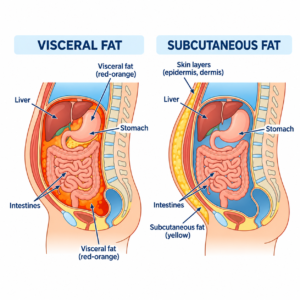
Not all body fat behaves the same way.
Fat stored deep inside the abdomen, known as visceral fat, is particularly associated with insulin resistance and metabolic problems. Insulin resistance means the body still produces insulin, but the cells do not respond to it efficiently.
The pancreas compensates by producing more insulin. Over time, blood sugar can begin to rise, eventually progressing from normal glucose levels to prediabetes and then type 2 diabetes.
At the same time, obesity can contribute to hypertension, abnormal cholesterol levels, inflammation, and other changes that place additional stress on the heart and blood vessels.¹
The Good News: Risk Can Change
Having overweight, prediabetes, or metabolic syndrome does not mean that diabetes or heart disease is inevitable.
And improving your health does not always require a dramatic transformation.
The American Diabetes Association reports that losing approximately 5% to 7% of body weight can improve blood sugar and other cardiovascular risk factors, and in people at high risk of diabetes it can help reduce progression to type 2 diabetes. Greater sustained weight loss may provide additional benefits.³
That might mean losing 10 to 14 pounds for someone who weighs 200 pounds—not necessarily reaching an unrealistic “perfect weight.”
Nutrition, physical activity, better sleep, treatment of blood pressure and cholesterol, weight-management medications, and in selected patients metabolic surgery can all be part of an individualized plan.
The important word is individualized.
Do Not Wait Until You Feel Sick
Metabolic disease often develops quietly.
A simple evaluation can include your blood pressure, waist measurement, fasting glucose or A1C, cholesterol, and triglycerides. These numbers can tell a much bigger story about your health than the number on the scale alone.
At Border Healthcare, we believe the goal should never be to shame someone about their weight. The goal is to understand their individual risk and help them find a realistic path toward better health.
If you have gained weight, have a family history of diabetes or cardiovascular disease, have been told that your blood sugar or triglycerides are elevated, or simply have not had your metabolic health evaluated recently, this may be a good time to start the conversation.
You do not have to change everything overnight.
Sometimes protecting your future health begins with simply knowing where you stand today.
Educational Disclaimer
This article is intended for general educational purposes and does not replace individualized medical evaluation, diagnosis, or treatment. Weight and metabolic risk should be evaluated in the context of the patient’s complete medical history and overall health.
References
- American Diabetes Association Professional Practice Committee. Obesity and weight management for the prevention and treatment of diabetes: Standards of Care in Diabetes—2026. Diabetes Care. 2026;49(Suppl 1).
- American Heart Association. What is metabolic syndrome? Accessed October 12, 2026.
- American Diabetes Association Professional Practice Committee. Prevention or delay of diabetes and associated comorbidities: Standards of Care in Diabetes—2026. Diabetes Care. 2026;49(Suppl 1).
- National Heart, Lung, and Blood Institute. Metabolic syndrome. National Institutes of Health. Accessed October 12, 2026.