
You have a headache, so you take ibuprofen. You have heartburn, so you reach for omeprazole.
You start feeling sick and find some leftover antibiotics at home.
It’s very common.
And many times, it works… at least for a while.
The problem is that feeling better does not always mean the problem is gone.
Self-medication may seem like a quick, practical, and inexpensive solution, but it can also hide an illness, delay a diagnosis, or create new problems when medications are used incorrectly.

The symptom may disappear, but the cause can still be there
One of the biggest risks of self-medication is getting used to treating only what we feel.
Pain. Inflammation. Heartburn. Congestion. Fever. Fatigue.
But these are symptoms, not diagnoses.
For example, if you have abdominal pain and repeatedly take medication to control it, you may feel better and continue with your day. But if the problem keeps returning for weeks or months, there may be an underlying cause that needs to be investigated.
The longer we treat only the symptom, the easier it is to delay the right treatment.
Medications can interact with each other
Another common mistake is assuming that every medication works independently.
That is not always true.
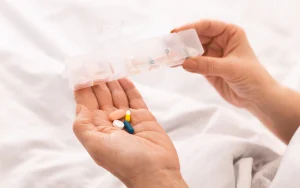
One medication can increase the effect of another, decrease its effectiveness, or increase the risk of side effects.
This also applies to over-the-counter medications, vitamins, supplements, and even some natural products.
That is why, when a healthcare professional asks, “What medications are you taking?”, the answer should include everything.
Just because a medication is available without a prescription does not mean it is completely harmless.
Antibiotics are not “just in case” medications
Antibiotics are one of the clearest examples.
Many people start taking them when they have a sore throat, cough, fever, or flu-like symptoms because they believe it will prevent the illness from getting worse.
But many common infections are caused by viruses, and antibiotics only work against bacteria.
Using antibiotics when they are not needed also contributes to antibiotic resistance.
This means bacteria can develop ways to survive medications that once worked against them.
In simple terms: taking an antibiotic when you do not need it can make certain infections harder to treat when you truly do need one.
Ibuprofen, naproxen, and other NSAIDs: common, but not harmless
Nonsteroidal anti-inflammatory drugs, or NSAIDs, include commonly used medications such as ibuprofen and naproxen.
They are very effective for pain and inflammation when used correctly.
Problems can begin when we think:
“If one pill didn’t work, I’ll take another.”
Or when we use them every day for weeks without asking why the pain keeps coming back.
Excessive or prolonged use can irritate the stomach and increase the risk of gastritis, ulcers, and gastrointestinal bleeding.
They can also affect kidney function, especially in people who are dehydrated, have kidney disease, or have certain chronic medical conditions.
The message is not that ibuprofen is bad.
The message is that no medication should be used without limits simply because it is easy to buy.
Tramadol: when a good pain medication is used incorrectly
Tramadol can be a very useful medication for certain types of pain.
But it is also an opioid.
When used without proper supervision, in higher doses, or for longer than recommended, there is a risk of tolerance, dependence, and addiction.
Many times, the problem begins very simply:
“I was prescribed it once and it worked perfectly.”
Later, the pain comes back, there are a few tablets left, and the person starts taking it again on their own.
This does not mean that everyone who takes tramadol will become addicted.
It means that it is a medication that should be used correctly and with caution.
Even very common medications have side effects
Omeprazole is another good example.
It can be extremely useful for conditions related to stomach acid, but some people begin taking it every day for months or even years without a clear medical indication.
Long-term use may affect the absorption of certain nutrients in some patients.
The same principle applies to many medications we consider “simple.”
Even allergy medications may cause dryness, drowsiness, or other side effects depending on the product.
And some nasal decongestant sprays, such as oxymetazoline, can cause rebound congestion when used for too long.
The nose feels blocked, the spray is used, breathing improves… then the congestion returns, creating a cycle that can become difficult to break.
The real problem with self-medication
Self-medication does not always mean taking a dangerous drug.
Sometimes it means something much simpler:
continuing to take medications to feel better without understanding why we keep feeling bad.
That is the real risk.
Before taking another medication, it is worth asking:
Do I actually know what I am treating?
Am I taking the correct dose?
How long should I be taking it?
Could it interact with my other medications?
And most importantly:
Am I treating the problem, or am I only hiding the symptom?
Sometimes the solution really is as simple as taking an over-the-counter medication.
But other times, a medical evaluation can prevent weeks of unnecessary treatment and help identify the real cause.
At Border Healthcare, we believe that good medical care begins before the prescription.
It’s not about taking more medications.
It’s about understanding what your body really needs and making better decisions about your health.
Border Healthcare
Connecting you with the care you need.
Content is for educational purposes only. It does not replace a medical evaluation and should not be used to start, stop, or modify any treatment prescribed by a healthcare professional.